

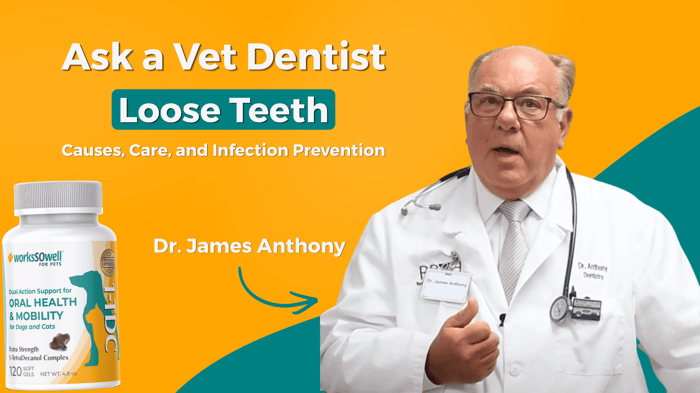

I recently received this question from a worried pet owner, and it's the kind of case that stays with you.
Q: "My chihuahua/rat terrier mix is nearly 14 years old and in early-stage congestive heart failure. We've been brushing her teeth twice daily for several years, added a dental powder about a year ago, and recently introduced 1-TDC into the routine. She's also had several professional dental cleanings. Despite all of this, her mouth is in terrible shape - she's lost half her teeth (some pulled during cleanings, others fell out on their own), and most of what remains is very loose. Is there anything we can do to help her keep her remaining teeth and prevent infection from rotting teeth from further damaging her heart?"
This is a heartbreaking situation, and I want to start by saying: you are clearly doing more than the vast majority of pet owners. Twice-daily brushing for years, dental powder, and now 1-TDC, on top of multiple professional cleanings, that's a serious commitment. So when a mouth is still deteriorating despite all of that, it tells me we need to look deeper rather than simply "do more of the same." Here's how I'd approach this case if she came into my exam room.
Start With Bloodwork
Has bloodwork been done recently? In a 14-year-old dog with congestive heart failure, I want current bloodwork - a full CBC, chemistry panel, and ideally a thyroid check, before making any further decisions about her mouth.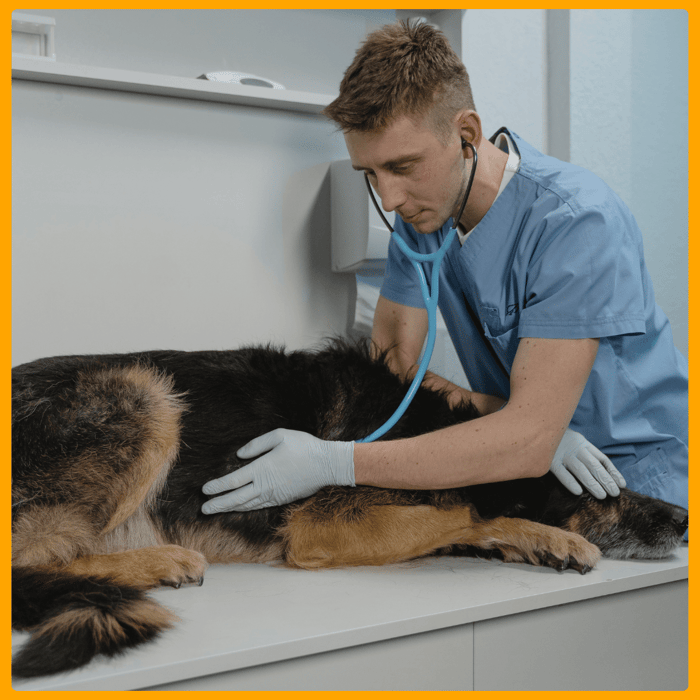
Periodontal disease and systemic disease have a two-way relationship: chronic oral infection can worsen cardiac disease through bacteremia and inflammatory mediators, while underlying metabolic or endocrine issues can accelerate periodontal breakdown from the other direction. I'd also want to know whether her heart medications (many CHF patients are on diuretics, ACE inhibitors, or pimobendan) are affecting her hydration status or saliva production, both of which influence oral health.
Get a Real Look Below the Gumline
Have dental radiographs, or ideally a Cone Beam Computed Tomography (CBCT), ever been taken? This is the piece I'd push hardest on. A visual exam alone dramatically underestimates what's happening below the gumline. In small-breed dogs especially, root resorption, bone loss, and even oronasal fistulas can be present with minimal outward signs beyond mobility.
If she's losing teeth spontaneously, I strongly suspect there's advanced bone loss that hasn't been fully mapped. Full-mouth radiographs (or a CBCT, if available) let us see exactly which remaining teeth are salvageable and which are quietly contributing to ongoing infection despite looking "okay" on the surface.
Consider the Anatomy She Was Dealt
Is there a predisposing anatomical factor at play? Chihuahuas and small terrier mixes are classic candidates for crowded dentition, retained deciduous roots, and thin alveolar bone. All of which accelerate periodontal disease independent of how good the home care is. If her jaw is small relative to her tooth size (very common in this breed combination), no amount of brushing fully overcomes the anatomical deck stacked against her.
Double-Check the Brushing Technique

What toothbrush and technique are you using? This matters more than people expect. A brush that's too large, or bristles that are too stiff, for a dog this size can actually traumatize already-inflamed gum tissue without effectively disrupting plaque at the gumline, which is the only place brushing actually makes a difference.
I'd want to know if you're using a soft, appropriately-sized brush (child-size or finger brush), angled at 45 degrees into the gingival sulcus, or more of a general surface scrub.
Give New Products Time to Work
How long has 1-TDC actually been part of the routine? Timeline matters here. If it's been a short window, it hasn't had time to show its full benefit. Oral microbiome and tissue changes from topical iodine-based products take weeks to months of consistent use.
My Recommendation
Given her age and cardiac status, I understand full anesthesia is a real risk-benefit conversation to have with her cardiologist. But if she hasn't had full-mouth radiographs recently, that's step one, even if it means doing them under light sedation with cardiology clearance rather than a full cleaning. We need to know what we're actually treating.
From there, any remaining teeth with significant bone loss (more than 50% attachment loss) are honestly doing her more harm than good sitting in an infected socket. Extraction, while it sounds drastic, often improves quality of life and reduces the chronic bacterial load hitting her heart. Keeping unsalvageable teeth "just to have teeth" isn't doing her any favors.
I'd rather see her with fewer teeth and a controlled, low-inflammation mouth than a mouth full of loose, infected teeth acting as a constant source of bacteremia.
1-TDC Oral Health + Mobility Support for Dogs

$34.00
Keep your pet Happy, Active & Comfortable from Head-to-Tail with 1-TDC. This unique supplement is SO effective that it is recommended by TOP Veterinary Experts worldwide to maintain and improve your pet’s health in 4 important areas: Oral Health….… read more